ServicesTile Flooring
Tile Flooring in Sugar Land
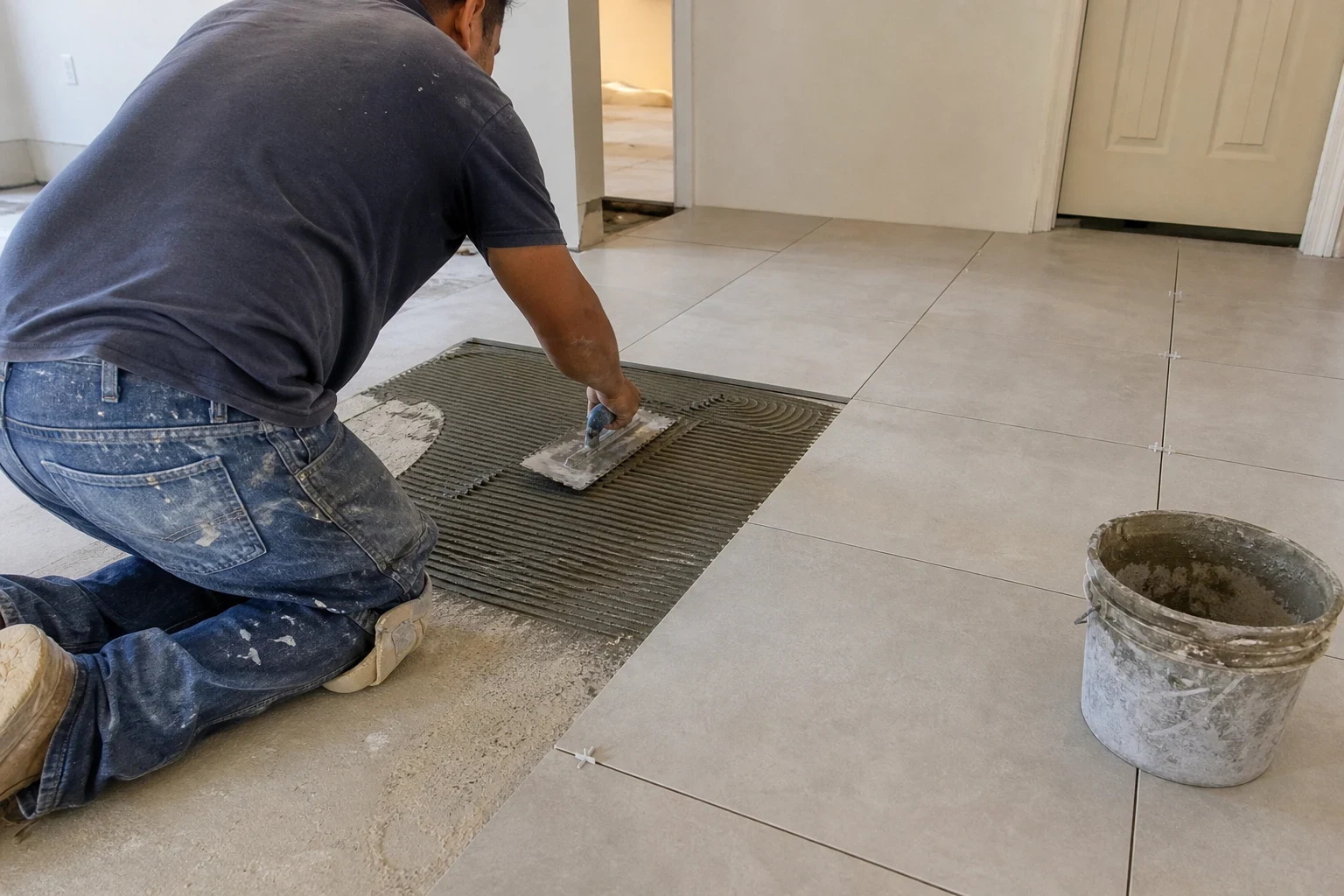
We install porcelain, ceramic and natural stone tile on a base we have checked, flattened and prepared first. Then we seal the grout and show you the few habits that keep a tile floor looking settled and sound for decades, not just on the day we leave.
A Floor Built to Outlast Everything Around It
Tile is the longest-lived floor most homes will ever have. A well-set porcelain floor shrugs off water, pets and heavy furniture, and it does not wear thin the way softer surfaces do. Its weak points are almost never the tile itself. They are a slab that was not flat, thin-set that did not fully cover the back of each piece, or grout that was never sealed.
That is where we spend our time. Most Sugar Land houses rest on concrete, and the ground beneath gets wetter and drier through the year, nudging the slab a little as it does. So we look for cracks, high spots and signs of movement before we choose a setting method. Done that way, the floor you choose is the floor you keep, with little more than regular cleaning and a fresh coat of grout sealer now and then.
Tile suits kitchens, baths, laundry rooms and entries best, and many people carry it through an entire ground floor. If you want something warmer underfoot in bedrooms, our hardwood flooring and luxury vinyl plank pages cover those options.
What Our Tile Work Includes
Removal of the old floor
We take up existing carpet, vinyl, laminate or tile and scrape the adhesive off the slab. Old tile removal is loud work, so we tell you in advance which day it happens.
Slab inspection and flattening
We run a long straightedge across the concrete, grind down the humps and fill the dips with leveling compound. The bigger the tile, the less unevenness it forgives, so we prepare the slab to suit the size you have chosen.
Crack isolation membrane
Where the slab has hairline cracks, we install an isolation membrane over them. It lets the concrete move slightly without passing that movement up into the tile.
Layout and setting
Before any mortar is mixed, we dry-lay a few rows and shift the starting line until the narrow slivers end up tucked against baseboards and thresholds, where trim and furniture hide them. Each tile is back-buttered and set for full coverage, which prevents hollow spots that crack later.
Grout, sealing and transitions
We grout, clean the haze off, and seal cement-based grout once it has cured. We also fit transitions where the tile meets other flooring so the edges stay protected.
A care walkthrough
Before we go, we show you which cleaners are safe for your tile and grout, which to avoid, and roughly when the grout will want resealing.
Signs Your Floor Is Ready for New Tile
Cracked tiles that keep returning
If you have replaced the same cracked tiles more than once, the problem is usually hollow spots or slab movement underneath. A reset on a prepared base fixes the cause, not just the symptom.
Grout that is crumbling or dark
Grout that has turned dark, powdery or is missing in lines lets water reach the setting bed. Once that has gone on for years, a new floor is often more sensible than chasing repairs.
Tiles that sound empty when knocked
Rap a tile lightly with the handle of a screwdriver. A dull, drummy note means the tile has lost contact with the mortar beneath it, and those are the pieces that split under a dropped pan or a heavy chair.
Swollen or peeling flooring in wet rooms
Laminate or vinyl that has lifted near a tub, dishwasher or laundry machine is telling you the room sees more water than it can handle. Tile handles it without complaint.
Dated tile you are tired of
Sometimes the floor is sound but the color and size no longer suit your home. That is a perfectly good reason, and we will tell you honestly whether the old tile has to come up.
How a Tile Job Runs
- 1
Start with a phone conversation
You describe the rooms, the tile you are drawn to and what is not working with the floor you have now. From there we arrange a visit to measure and see the subfloor for ourselves.
- 2
Measuring and a look at the slab
We measure each room, check flatness and note cracks, then talk through tile size and layout. You get a written estimate that lists removal, prep, materials and labor separately.
- 3
Removal and preparation
We protect cabinets, doorways and the rooms we are not working in, then remove the old floor and prepare the slab. Dust from grinding is controlled with vacuum-attached tools.
- 4
Laying tile, then grout
A small bath may be set in a single day, while large-format tile or a detailed pattern can take several. We wait until the thin-set is firm enough to stand on before we return to fill the joints.
- 5
Sealing, cleanup and care
We seal the grout, fit transitions, haul away debris and vacuum. Then we walk the floor with you and leave simple care instructions.
What Moves the Price of a Tile Floor
Two tile floors of the same size can be priced quite differently, and most of the difference sits below the surface. We give you a written estimate after we have seen the slab, with each part listed so you can see where the money goes.
- Tile material and size
- Porcelain, ceramic and natural stone differ in cost and in how they are cut and set. Large-format and plank-style tiles need more prep and more careful handling.
- What comes up first
- Pulling carpet is quick. Removing old tile set in a mortar bed takes much longer and produces more debris to haul.
- Slab condition
- A flat, sound slab needs little work. Cracks, high spots and dips add grinding, leveling compound and isolation membrane.
- Layout and pattern
- A straight lay is the simplest. Herringbone, diagonal and offset patterns add cuts, time and material waste.
- Rooms, cuts and transitions
- Open areas go faster than small baths and hallways full of corners. Each doorway and change of flooring adds trim work.
Tile Flooring Questions
Something not covered here? (346) 598-7443
How soon can we walk on the new tile?
Most floors can take careful walking in socks or soft shoes roughly 24 hours after the joints are filled. Heavy furniture and appliances should stay off a while longer. We will give you the exact timing for the setting materials used on your floor.
Will my tile crack if the foundation moves?
Slab movement is the most common reason tile cracks, so we plan for it. We set each tile with full mortar coverage, use crack isolation membrane over existing cracks and leave movement joints at the perimeter and in large rooms. These steps cannot stop a foundation from shifting, but they keep normal seasonal movement from reaching the tile.
How often does the grout need sealing?
Cement-based grout benefits from resealing every year or two, more often in busy kitchens and entries. A quick test is to drip water on a grout line. If it darkens instead of beading, it is time. Some grouts, such as epoxy, need no sealing at all, and we can talk through that choice.
Can you lay new tile over my old tile?
Occasionally, if the old tile is firmly attached everywhere, flat, and the extra height will not interfere with doors or appliances. In most homes we recommend removing it, because hidden hollow spots in the old layer can crack the new one. We will tell you which applies after we tap and check the existing floor.
Porcelain, ceramic or stone, which should I choose?
Porcelain is dense, absorbs very little water and works almost anywhere in your home. Ceramic is a good value for walls and lighter-traffic rooms. Natural stone is beautiful but needs regular sealing and gentler cleaners, so it suits people who enjoy that kind of upkeep.
How messy is the job?
Tearing out the old floor and grinding the slab are the loud, dusty stages, and we keep them contained with plastic sheeting and tools hooked to vacuums. Once tile starts going down, the house gets noticeably calmer. Each evening we tidy the work area, and on the last day we haul off every bit of debris.
Plan a Tile Floor That Lasts
Tell us about the rooms and the tile you like. We will set a time to measure, check your slab and walk you through the options.