ServicesStair Flooring
Stair Flooring in Sugar Land, Fitted for the Long Haul
Every trip up and down lands on the same narrow strip at the front of each step, so a staircase wears faster than the rooms around it. We replace tired treads and risers with materials that suit how your family uses them, and fit each piece to stay tight, quiet and easy to keep clean.
What Stair Flooring Involves
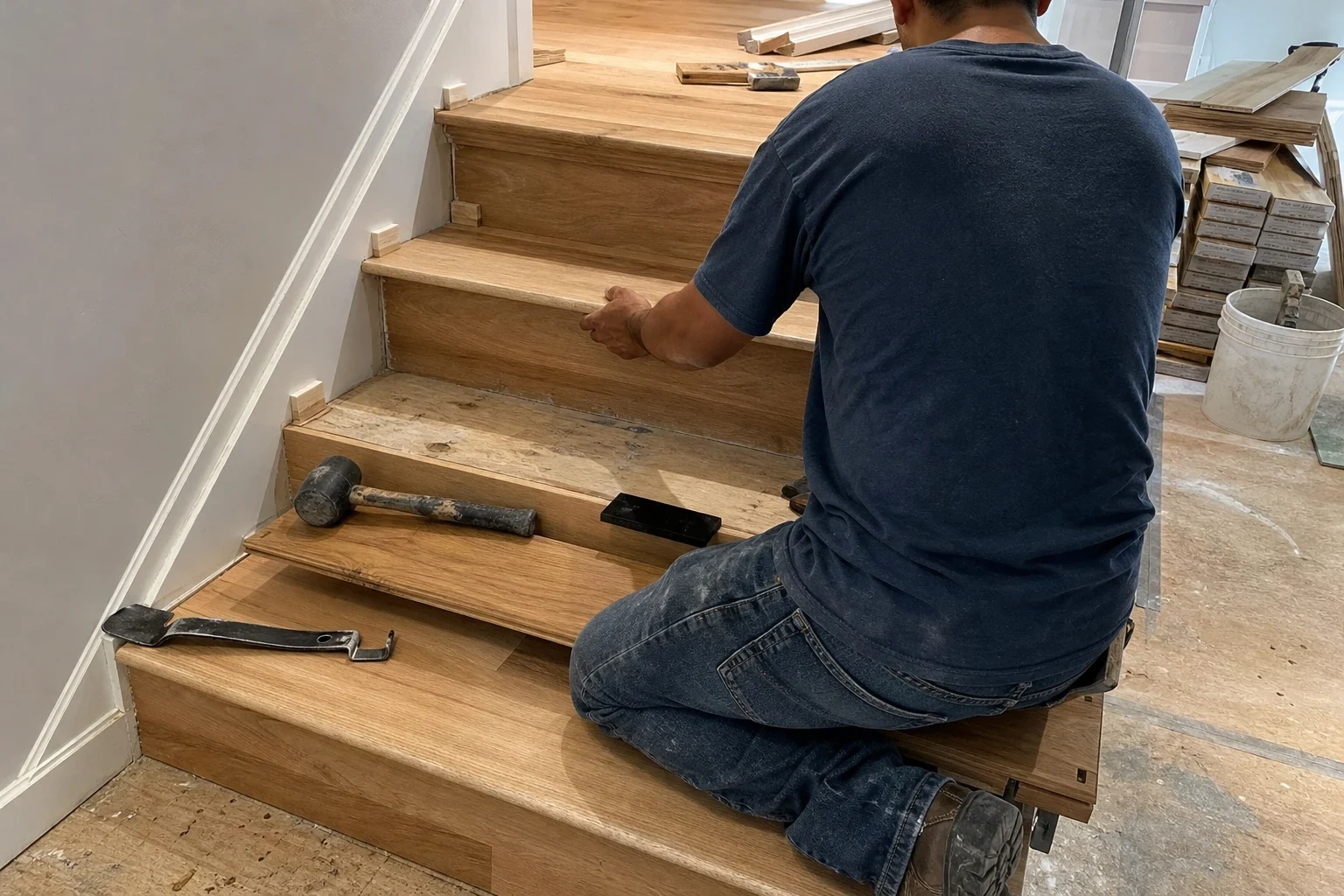
A staircase is a series of small, separate floors, each with an edge that every foot lands on. That is why stair flooring is its own kind of job. Each tread is measured and cut on its own, the nosing has to be solid and well fastened, and the riser has to meet the tread cleanly so dirt has nowhere to collect.
We work in hardwood, luxury vinyl plank, laminate and carpet on stairs, and we usually match or complement the flooring at the top and bottom. If you are putting new hardwood flooring or luxury vinyl plank downstairs, the stairs are often the piece that makes the whole level feel finished.
Our focus is how the stairs will hold up five and ten years from now. That shapes the material we suggest, the nosing we fit and the care advice we leave you with.
What the Work Includes
- Clearing the old surface
- Old carpet comes off along with the pad, the tack strip and every staple left in the wood. Worn treads are lifted where needed, and we carry the debris out with us. Each step ends up bare so we can see the structure.
- Checking each stair
- Before anything new goes on, we look for loose treads, split stringers and squeaks. Problems get fastened or shimmed now, because a new surface will not fix a step that moves.
- Treads, risers and nosings
- Every tread is scribed to its own width, since few staircases are perfectly square. Nosings are glued and mechanically fastened so the front edge stays put under years of foot traffic.
- Landings and transitions
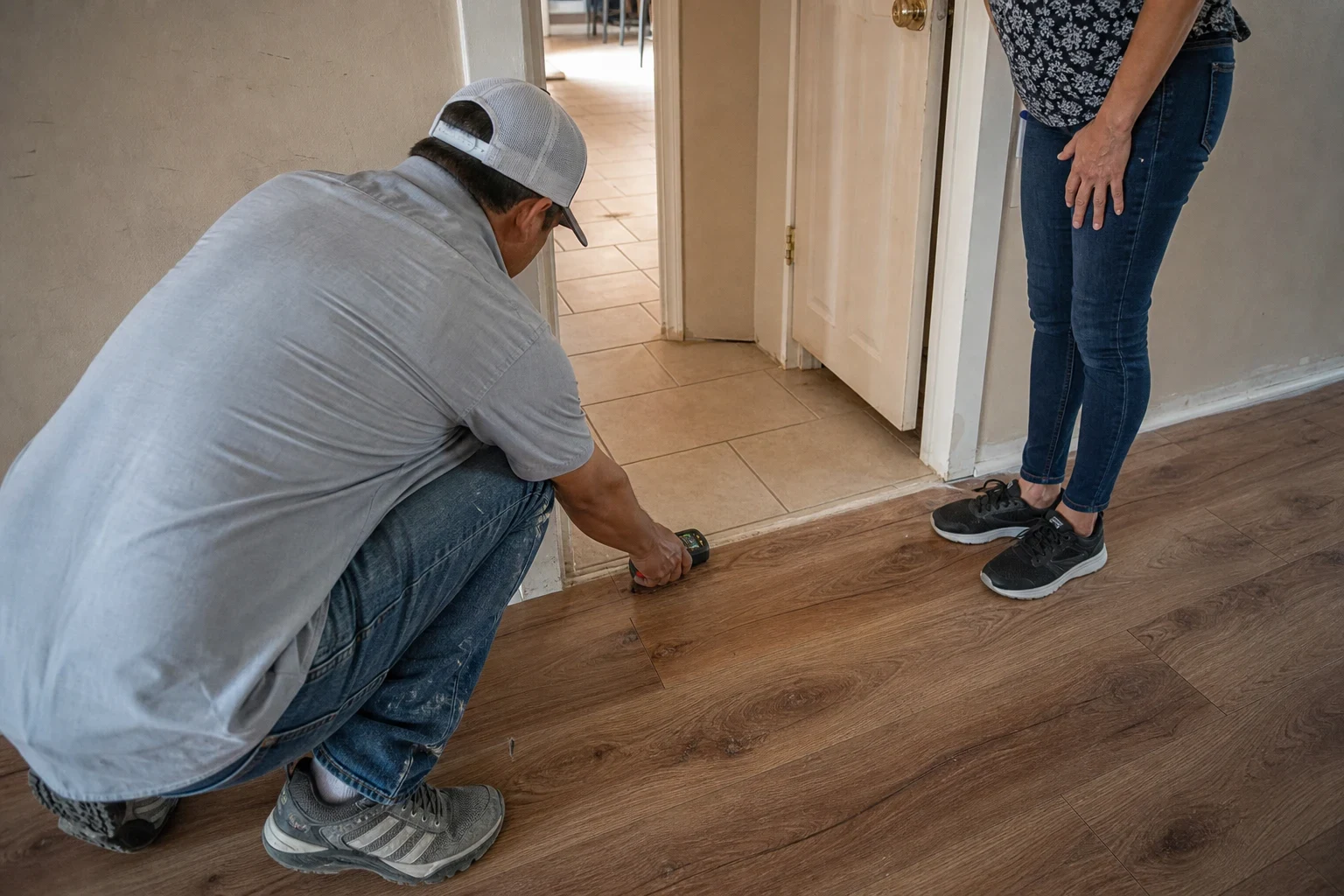
- We tie the stairs into the landing and the floors above and below with matching trim, so there are no raised lips to catch a toe.
- Cleanup and care notes
- We vacuum the stairs and the work area when we finish. You get plain notes on cleaning your new stair surface and what to avoid.
Signs Your Stairs Are Ready for New Flooring
Carpet worn flat at the edge
When the nosing shows through matted pile, or the backing is visible, the carpet is past saving. It also gives less grip there, right where you need it.
Loose or rolling nosings
A nosing that shifts underfoot is a trip risk. On laminate and vinyl stairs it often means the original adhesive has let go.
Squeaks and soft spots
Noise usually comes from a tread rubbing a nail or riser. We find the cause and secure it before the new surface goes down.
Stairs that no longer match
New flooring downstairs can make an old staircase look tired. Matching the material ties the rooms together.
Cleaning that never quite works
Carpet that holds pet hair and stains in the corners may be better replaced with hard flooring that wipes clean.
What Moves the Price
Stair work is priced step by step and detail by detail, not by square footage alone. A straight run and a winding one with the same step count can take very different amounts of labor. Each line on your estimate is explained so the total makes sense before work begins.
Number and shape of steps
Straight runs are the simplest. Winders, pie-shaped steps and open sides with exposed ends take more cutting and trim.
Material and nosing style
Solid hardwood treads, matching vinyl or laminate nosings and carpet with pad each carry different material and labor costs.
Condition underneath
Loose treads, damaged stringers or heavy adhesive residue add preparation time. Anything like that is photographed and talked over with you first, and no added work starts without your okay.
Balusters set in the treads
Where balusters sit in the treads, we either cut neatly around them or lift them out and set them back afterward. Both approaches take extra time.
From First Call to Finished Stairs
- 1
Start with a phone call
We ask how many steps you have, what flooring sits at the top and bottom, and who uses the stairs most. Then we pick a time to visit and measure.
- 2
Measuring and material choice
We measure every tread and riser, check the structure and talk through materials side by side. You get a written estimate with each part listed.
- 3
Preparing the stairs
On the work day we lay protection over the hallway, landing and lower wall, strip each step down to bare wood and tighten any tread that moves. Most staircases are worked from the top down.
- 4
Fitting the new surface
Treads, risers and nosings go on one step at a time with adhesive and fasteners suited to the material. We tell you when the stairs are safe to use, which is often the same evening for carpet and the next day for glued hard surfaces.
- 5
Walkthrough
We walk the stairs with you, check every nosing and clean up before we leave.
Stair Flooring Questions
Which material lasts longest on stairs?
Hardwood treads with a solid nosing hold up well and can have a single worn tread replaced later. Luxury vinyl plank with a proper matching nosing is very durable and handles spills well. Carpet is softest and quietest but shows wear at the edges first. We help you weigh those against how your household uses the stairs.
Can you match the floor I already have downstairs?
Often, yes. If we are installing new flooring on the main level, we can order matching treads and nosings at the same time. With older existing floors we bring samples to compare and suggest a close match or a deliberate contrast.
Will my stairs be out of use all day?
Expect the stairs to be off limits while we work. For carpet you can usually walk on them that evening. For glued hard treads we ask you to stay off for the cure time, and we tell you exactly how long before we start.
How do I keep new stair treads looking good?
Vacuum or dry mop regularly so grit does not grind into the edges, and use cleaners suited to the material. Avoid wet mopping hardwood and laminate. Stair carpet benefits from vacuuming the nosings with an attachment, since that is where dirt settles.
Can you fix squeaky stairs during the job?
Yes. With the old covering off we can reach the treads and fasten or shim them before the new surface goes on. It is the best time to quiet a staircase.
Ready for Stairs That Wear Well
Give us a sense of how your stairs are used and what flooring meets them at each end. We will arrange a visit to measure and put together a written estimate that lists every step.