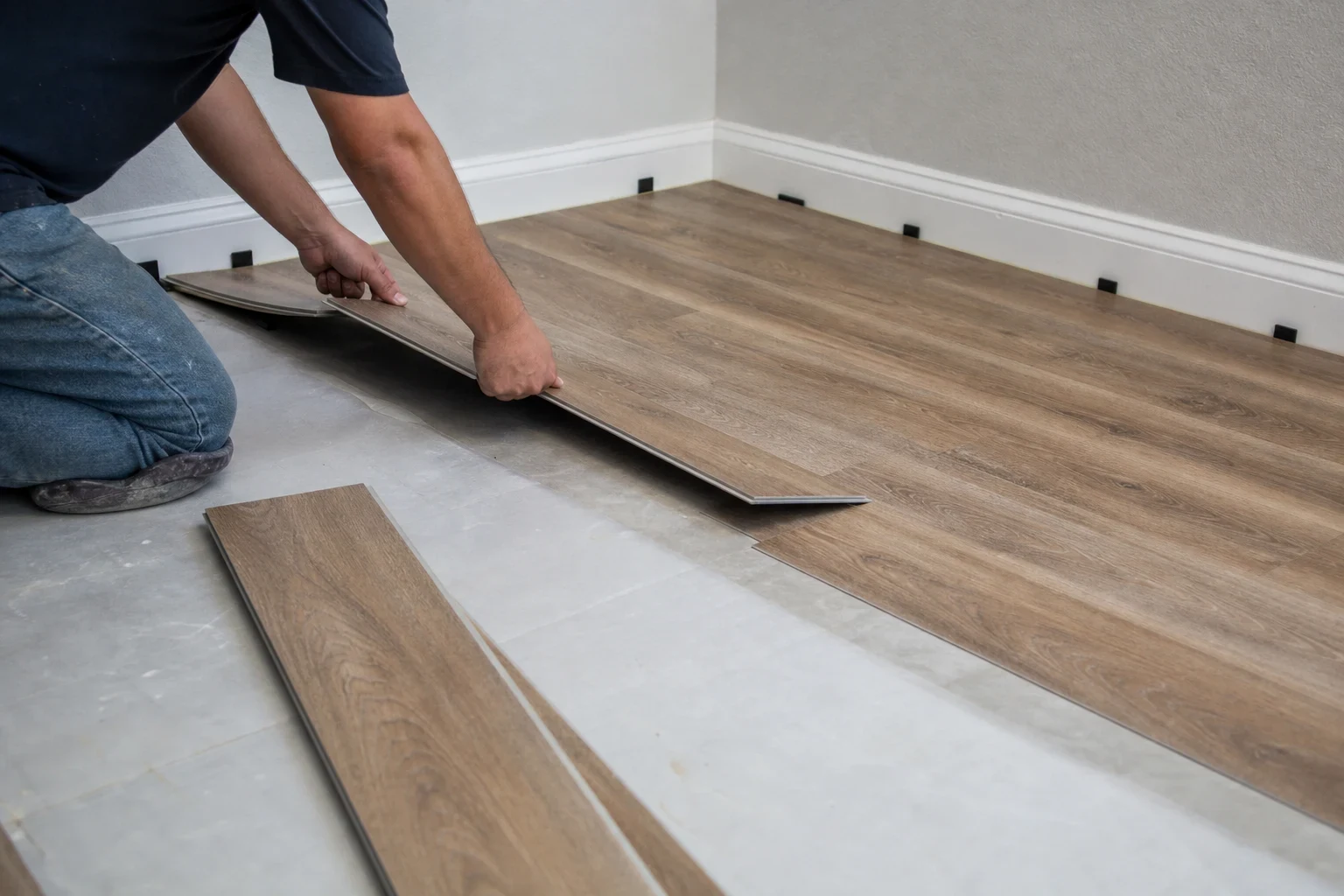
ServicesLuxury Vinyl Tile
Luxury Vinyl Tile in Sugar Land
Our luxury vinyl tile installations pair a stone or ceramic appearance with a surface that feels warmer and quieter underfoot. We flatten and test the subfloor first, leave each tile room to expand, and show you the simple habits that keep it in good condition for years.
A Tile Look That Asks Little of You
This product, usually shortened to LVT, carries a printed slate, travertine or concrete image beneath a clear wear layer. It is cut into squares or long rectangles, and a 12 by 24 inch piece is a popular size. Some lines are meant to be grouted, while others rely on a tight beveled edge. In both cases the surface handles spills calmly and will not chip when a heavy pan slips off the counter, the way ceramic can.
Most of what decides how long a vinyl tile floor lasts happens before the first tile goes down. A slab that is out of flat, a missing expansion gap or skipped acclimation will show up later as lifting edges and gaps. We spend our time on that groundwork, because a floor laid well needs far less attention afterward.
Choose it for rooms that take water and steady foot traffic, such as a kitchen, a bathroom, the laundry or the front entry, when the look of stone appeals but cold grout joints to scrub do not. If you prefer a wood-grain board look, our luxury vinyl plank page covers that option.
What Our Vinyl Tile Installation Includes
- Moisture and flatness checks
- Most homes here sit on concrete slabs, so we test for moisture and check flatness with a straightedge before choosing an underlayment or adhesive. You see what we find.
- Tearing out what is there now
- Old carpet, worn sheet goods and loose ceramic come up and leave with us. When existing ceramic is solid and flat, we tell you honestly whether laying over it makes sense.
- Subfloor leveling
- Low spots get patch or self-leveling compound, and high ridges are ground down. Rigid tiles telegraph every dip, so this step matters.
- Careful layout
- We center the pattern on the room's main sightline and plan the cuts so the narrowest pieces land along walls and under trim, never across a threshold where everyone would notice them.
- Trim and transitions
- Expansion gaps are covered with baseboard or quarter round, and we fit transitions where vinyl meets carpet, hardwood or tile in the next room. In bathrooms we pull and reset the toilet.
- Care walkthrough
- Before we leave, we go over cleaning products, furniture pads and the few habits that keep the wear layer intact.
Signs Your Floor Is Ready for Vinyl Tile
Cracked or hollow ceramic
Tiles that sound hollow when tapped or have hairline cracks usually mean the adhesive has let go underneath. Vinyl tile is a good replacement where you still want the tile look.
Sheet vinyl curling at seams
Older sheet goods lift at edges and trap dirt. Once the seams open, water finds its way under.
Carpet in rooms that see spills
Carpet in a dining area or near a back door holds stains and odors. A cleanable hard surface ends that cycle.
Existing vinyl that peaks or gaps
If floating vinyl tiles are pushing up at seams, the floor was likely pinned under cabinets or laid without enough gap. We correct the cause, not just the tile.
Grout you are tired of scrubbing
A tight-bevel vinyl tile keeps the stone appearance with far fewer lines to clean.
What Moves the Price of Vinyl Tile
Your price comes down to the size of the space, the product you choose and how much work the floor beneath needs. We explain each part on the phone and in person so nothing appears later as a surprise.
Size and layout of the rooms
A large open room moves along at a steady pace. Every closet, angled wall and doorway adds cutting and fitting time.
Product and wear layer
Thicker wear layers and rigid stone-core tiles cost more but hold up better under chairs and pets. Grouted lines add a step.
Condition of the slab
A flat, dry slab keeps prep light. Cracks, high spots or moisture that needs a barrier add material and labor.
What comes out first
Removing glued-down tile or sheet vinyl takes longer than pulling carpet, and disposal is part of the job.
Trim, transitions and fixtures
New baseboard, extra transitions and toilet resets each add a modest amount.
How a Vinyl Tile Job Runs
- 1
Measure and look underneath
We visit, measure each room and check the slab and any existing floor. You get a clear picture of the prep your space needs.
- 2
Let the material settle
The tile is delivered and left in your home so it adjusts to indoor temperature and humidity before installation, typically around 48 hours, or whatever the manufacturer specifies.
- 3
Prepare the base
Old flooring comes up, the slab is cleaned, and leveling compound is applied where needed. Furniture you have cleared stays out of the work area.
- 4
Lay, trim and clean up
Tiles go down following the planned layout, trim and transitions are fitted, and we vacuum and wipe the new floor before walking you through it.
Questions About Luxury Vinyl Tile
What is the difference between luxury vinyl tile and luxury vinyl plank?
The material is much the same. Tile comes in stone and ceramic formats, usually square or wide rectangles, while plank mimics wood boards. Your choice is about the look you want in each room.
Is luxury vinyl tile waterproof?
The tiles themselves resist water well, which is why they suit kitchens and baths. Moisture that reaches the perimeter of the room can still seep beneath them, so we caulk around tubs and set trim snugly along the walls. Standing water from a leak should still be dried quickly.
Can you install it on top of the ceramic I already have?
That depends on the tile underneath. When every piece is bonded firmly and the surface is flat, we skim-coat the grout joints and lay the vinyl directly on top. Loose, hollow or cracked pieces have to be removed first, otherwise movement below works its way up into the new floor.
How should I clean it?
Sweep or vacuum grit, then damp mop with a pH-neutral cleaner. Skip steam mops, wax and oil soaps. Rubber-backed rugs can stain vinyl, so choose mats with a natural or vinyl-safe backing.
Will furniture or sunlight damage it?
Felt pads under chair and table legs prevent most scuffs and dents. Strong afternoon sun through large windows can heat a floating floor and fade some colors over time, so blinds or curtains help on south and west sides.
Plan a Vinyl Tile Floor That Stays Put
Let us know which rooms you have in mind, what covers them today and the finish you are picturing. We will go over prep, product options and timing so the job holds no surprises.