ServicesLaminate Flooring
Laminate Flooring in Sugar Land
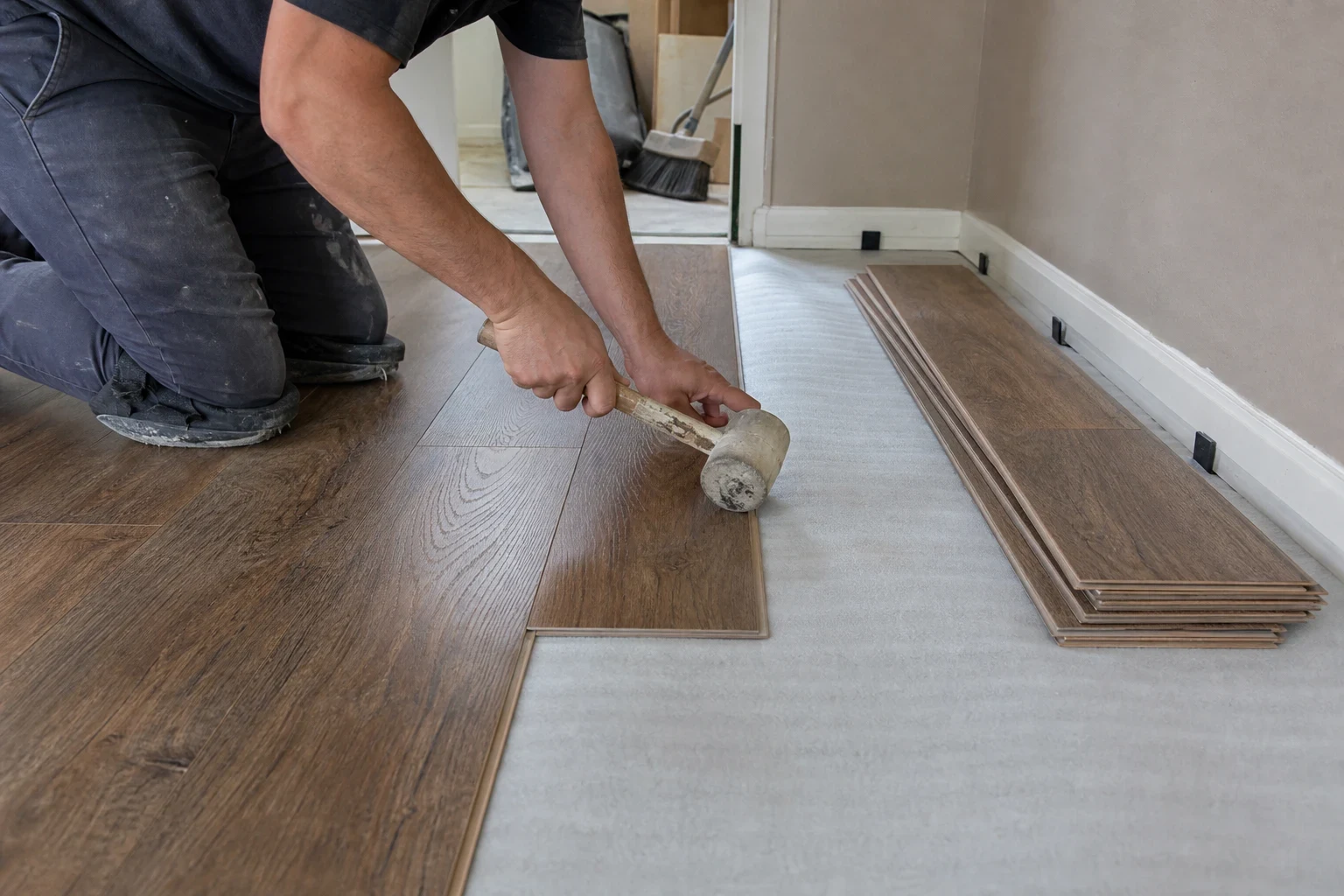
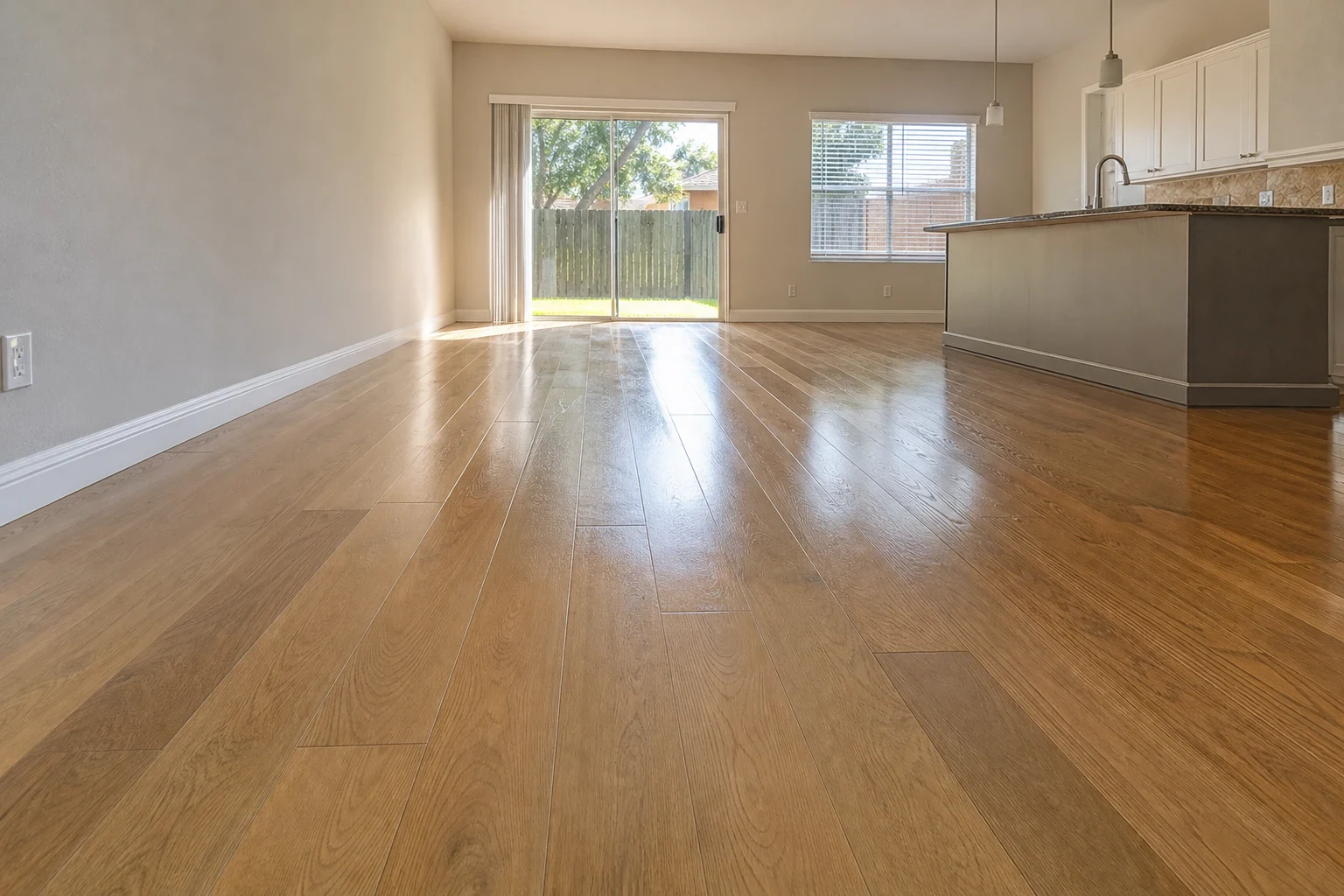
Laminate puts a wood-grain look in your home with a hard top layer that stands up to scuffs and scratches. How long it lasts is mostly settled underneath: a flat subfloor, a real moisture barrier and space to expand. We install it that way, then show you how to care for it.
A Durable Surface That Rewards Good Preparation
Each laminate plank starts with a dense fiberboard core. A photographic layer above it carries the wood grain, and a hard transparent coating, the wear layer, seals everything in. That coating handles daily traffic well, including dogs, chairs and grit carried in from the yard. The core is the part to protect. If water sits on a seam or rises up from the slab, it swells, and swollen laminate does not shrink back.
That is why we spend real time on the floor under your floor. Most homes around Sugar Land sit on concrete slabs, so we check flatness, lay a vapor barrier and leave the expansion gaps the manufacturer calls for. A floor installed this way stays quiet, tight at the seams and easy to keep clean for many years.
Laminate suits living rooms, bedrooms, halls and home offices. For full bathrooms or laundry rooms we usually point you toward luxury vinyl plank or tile flooring, and we will say so plainly.
Everything Done on a Laminate Job
- Taking out what is there now
- Old carpet, its pad and the tack strip come out first, or worn laminate if that is what you have, and we take it all off site. Tile is priced as its own line, since breaking it up is slower and dustier work.
- Subfloor flatness check
- We run a straightedge across the room and mark the high and low spots. Low areas get leveling compound and high spots are ground down so the click joints lock fully and stay locked.
- Vapor barrier and underlayment
- On concrete we lay a moisture barrier, either a separate sheet or an underlayment with one built in. It also softens footfall and cuts the hollow sound some laminate floors have.
- Expansion space and trim
- We hold the planks back slightly from walls, cabinets and door casings, leaving room for the floor to shift as humidity rises and falls through the year. Baseboards or quarter round hide that space, and we undercut door jambs so planks slide neatly beneath them.
- Transitions to other floors
- Where laminate meets tile, carpet or a sliding door track, we fit matching transition pieces. They let each floor move on its own without cracking at the edge.
Signs Your Floors Are Ready for Laminate
Carpet that holds onto everything
Matted traffic lanes, stubborn stains and dust that returns after every vacuum tell you the carpet has done its job. Laminate wipes clean in minutes.
Old laminate with peaked seams
Edges that rise into small ridges usually mean the boards took on moisture or were pinned against the wall without a gap. Those boards will not flatten again.
A floor that clicks or bounces
Hollow spots and soft give underfoot point to an uneven slab below. New flooring over a properly leveled base fixes the cause, not just the surface.
Worn finish in busy rooms
Gray paths in front of the sofa or kitchen island mean the wear layer is gone. A higher-rated laminate holds up better in those same spots.
What Shapes the Price of Laminate
Two rooms of the same size can price quite differently once we see what sits under the old floor. We give you a line-by-line estimate after measuring, so you can see where the money goes and decide on options before any work begins.
Square footage and layout
A plain rectangular room goes down fast. Each closet, angled corner or extra doorway adds cutting time and another length of trim.
Slab condition
A flat slab needs little work. Dips, ridges or old adhesive add leveling and grinding time.
The plank you choose
Prices climb with plank thickness, a tougher AC wear rating and a core built to resist water. In kitchens and entry halls, that extra spend usually earns its keep.
What comes up first
Carpet removal is quick. Tile or glued-down flooring takes longer and adds disposal.
Stairs and trim
Laminate on steps needs special nosing and careful fitting. Our stair flooring page covers that work in detail.
How a Laminate Job Runs
- 1
Talk and measure
We start with a phone conversation about the rooms, your pets and how you use the space. Then we measure, check the slab and help you compare products by wear rating and water resistance.
- 2
Let the planks settle
Boxes are delivered and left flat in the rooms for a couple of days. Laminate adjusts to the indoor humidity, which matters a great deal in a Gulf Coast house.
- 3
Prep and install
We clear the old floor, level the slab and lay the barrier. Rows are staggered so seams never line up, and every plank is tapped home until the joint closes completely.
- 4
Trim, clean and walk through
Baseboards and transitions go on last. We vacuum, walk the floor with you and explain the daily care that keeps the surface and seams in good shape.
Laminate Flooring Questions
Is laminate a sensible choice for a kitchen?
It can be, provided you pick a water-resistant laminate whose joints lock tightly enough to keep spills on the surface. We also ask that spills get wiped up soon rather than left to sit. Right beside a sink that stays wet, luxury vinyl plank often makes more sense.
Can you install laminate over my existing tile?
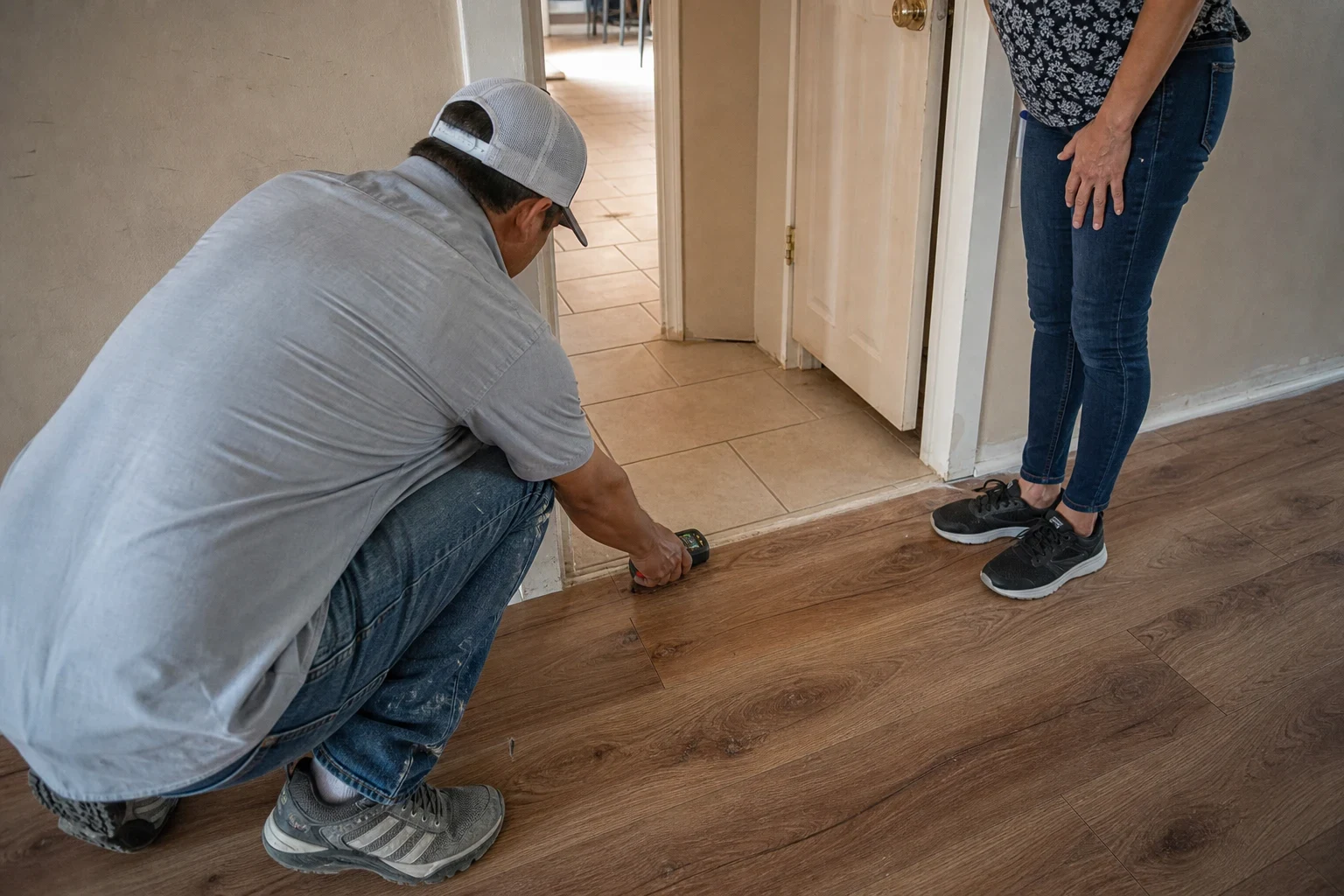
Often we can, as long as the tile is solid and flat and the added height does not interfere with doors or appliances. We check grout lines and loose tiles first. If the height is a problem, we remove the tile instead.
How soon can we walk on it?
Right away. Laminate floats over the underlayment with no glue to cure, so you can walk on it and move furniture back the same day. Put felt pads on chair and table legs first.
What if a plank gets damaged later?
A single damaged plank can usually be replaced, especially near a wall. We suggest you keep a spare box from your install so the color and texture match.
How should we clean it?
Sweep or vacuum with a hard-floor setting, then use a barely damp microfiber mop. Skip steam mops and wet mopping, since moisture forced into seams is what ages laminate fastest. Mats at exterior doors catch the grit that dulls the wear layer.
Plan a Laminate Floor That Holds Up
Tell us about the rooms and what lies under them now. We will talk through products, prep and care so the floor stays tight and good-looking for years.